
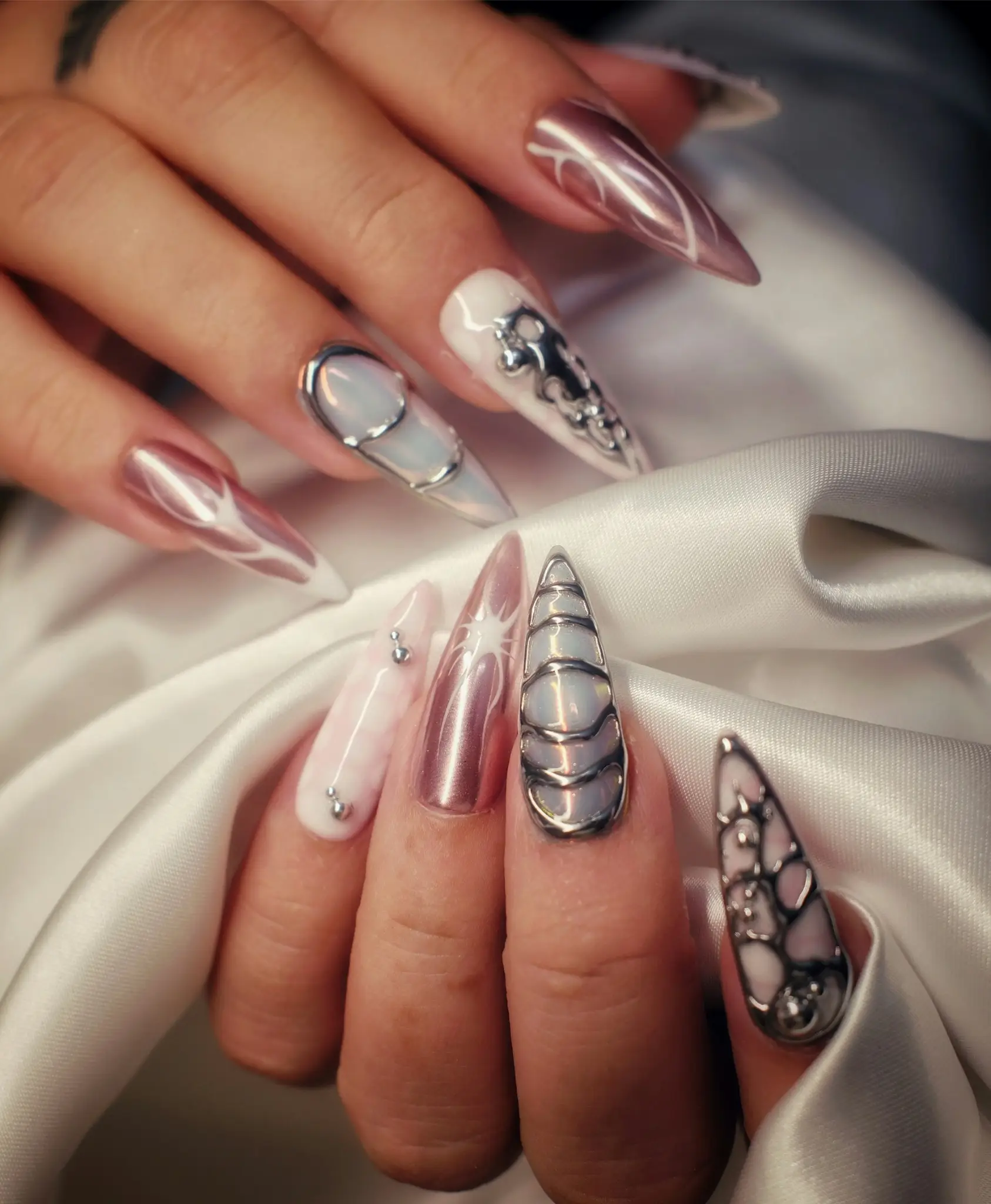
 Veena
Veena Builder gel for nails is a thick brush on gel that strengthens your natural nail, can extend it for you if you require it and will then set rock hard under a UV or LED light. It‘s the product I use by far the most on my own nails especially as it works brilliant on thin or peeling nails but still gives you that perfect transparent, glass like finish if applied well. This base is the foundation for most of my longer lasting manicures whether you want to strengthen or extend.
What Is Builder Gel though?
Builder gel – is a thick, structural gel (thicker then gel polish) that is applied in order to build or extend the nail, and then cured in a lamp. The builder gels purpose is to serve as a structural backbone for the nail. So that it won‘t bend, or snap.
You‘ll find it marketed under a few different names. Erica‘s ATA says it is usually referred to as structured gel, gel overlay or BIAB (“Builder In A Bottle”) which are pretty much the same things with slightly different terms. The real difference, to quote a nail tech in no uncertain terms, is whether the gel is “hard” (files off, doesn‘t soak in acetone) or “soft” (soaks off). Everything else BIAB, structure gel, rubber base just falls under one of those two categories.
What is Builder Gel made of?
Made of acrylate/methacrylate derivatives (a gel form of the same chemical family as acrylics), with an added personal fave photoinitiators, which are responsables for the gel‘s physical harden by UV/LED light. The Gel Collection‘s ingredients breakdown for the collection lists acrylates copolymer and ethyl methacrylate as the most common structural members, with thickeners, plasticisers, and pigments (for tinted formulas) completing the picture.
One warning before you purchase: though some builder gels don‘t have this ingredient, many consumer brands still do. HEMA is a common allergen of the nail, and skin reactions can occur after months of pain free application if you are allergy prone, read labels!
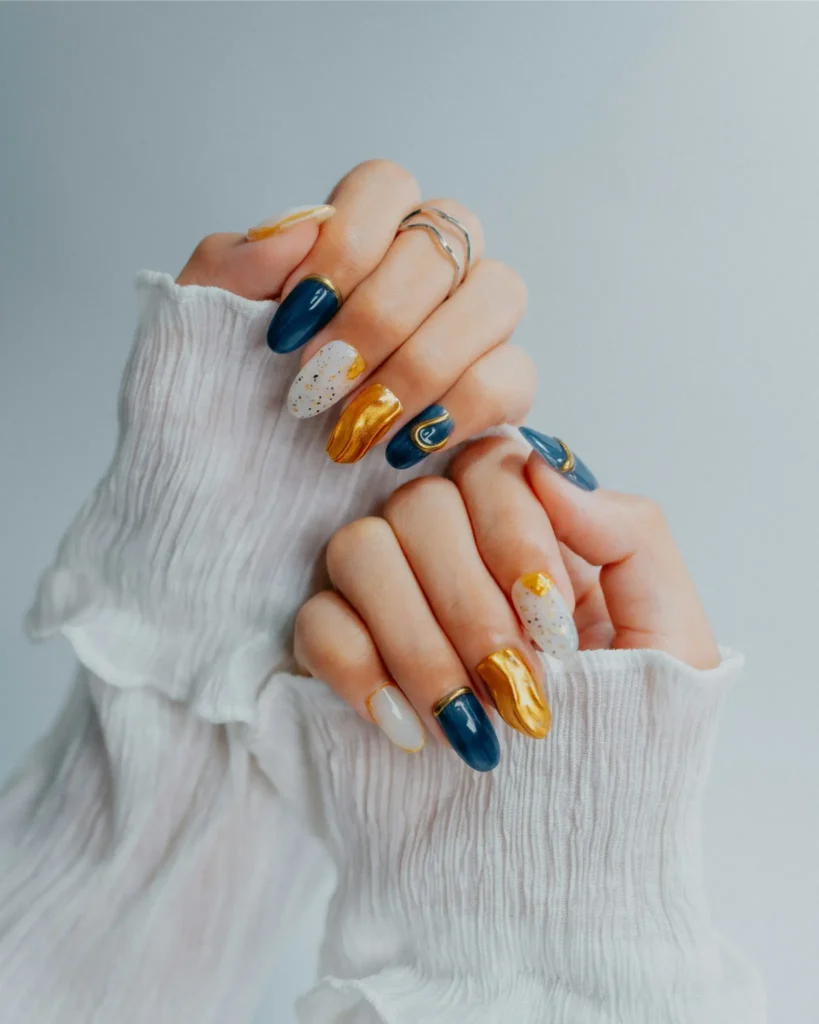
How Builder Gel Is Applied
| Stage | What Happens |
|---|---|
| Prep | Nail cleaned, cuticles pushed back, surface buffed and dehydrated |
| Base coat | Thin bonding layer applied and cured to prevent lifting |
| Build | Gel brushed on in thin layers, cured between each one |
| Shape | Filed to refine shape and smooth the surface |
| Finish | Top coat applied and cured for shine |
“MMM Beauty notes this is where most DIY sets fall down first, do not dehydrate buff properly and no matter how good the gel is it will not adhere.
Two things I never skimp on: I leave a tiny little space between the gel and cuticle/side walls overfilling corners causes lifting #1. I also always cure each layer for the entire time, not just until it looks set; under-cured layers remain soft underneath and lift off in sheets later. Following ASP Nail‘s instructions, I buff the brush out from the center of the nail towards the free edge, using a thicker gel for extensions and a thinner, self-leveling gel if I am still new to it.
Builder Gel vs. Acrylic vs. Gel-X vs. Dip Powder
| Builder Gel | Acrylic | Gel-X | Dip Powder | |
|---|---|---|---|---|
| Applied as | Brushed gel, cured under lamp | Powder + liquid, air-dries | Pre-shaped tips, bonded on | Powder over adhesive |
| Feel | Flexible, light | Rigid, heavier | Lightweight | Bulkier |
| Maintenance | Refillable | Refillable, more filing | Usually fully removed | Usually fully removed |
| Avg. wear | 3–4 weeks | 2–3 weeks | 3–4 weeks | 2–3 weeks |
| Needs lamp | Yes | No | Yes | No |
As Erica‘s ATA‘s comparison points out, builder gel is infilled directly on the nail so it is generally better for long-term natural nail health, while it is also infilled, Gel-X is a whole foil system needing removal and reapplication. Beginners find Gel-X faster while builder gel has more long-term health benefits and shaping control.
Types of Builder Gel
- Monophase one product for base, build and finish. Best for beginner.
- Biphase/triphase separate base, builder and finishing gel. More steps, more control still the pro standard.
- Self-levelling applies evenly without brushskill needed. Colored builder gel structure+color in one step.
Advantages & Disadvantages
| Pros | Cons |
|---|---|
| Reinforces thin, bendy nails | Needs a UV/LED lamp |
| Lighter than acrylic | Removal needs soaking or filing |
| Refillable, less repeat damage | HEMA can trigger reactions |
| Natural, glossy finish | Learning curve for apex/structure |
For how long does it last?
3-4 weeks before a refill, assuming good prep and application. NewBeauty points out that since it‘s a refill rather than fully taken off each time, it‘s easier maintenance and less damaging than a full acrylic redo. How long it lasts also depends on how well corners were kept clean and how regularly cuticle oil was applied afterward.
Frequently Asked Questions
Is builder gel not good for your natural nails?
Not necessarily damage is generally caused by incorrect removal, (peeling it off) rather than the product.
What‘s the main distinction between builder gel and BIAB?
Nothing structural – BIAB is just builder gel in a bottle-and-brush format as opposed to a pot.
Can I remove builder gel at home?
Yes, most builder gels are available for removal at home using acetone. Once shape and thickness of gel has been determined follow the manufacturer‘s instructions on how to safely soak the nail.
Soft/soak-off gel can be filed very thin & soaked in acetone. Hard gel can‘t soak off & has to be filed or grown out & should be done by a professional.
Do I need a lamp to use builder gel at home?
Yes only cures with UV/LED curing and remains sticky when air-dried.
Bottom Line
Builder gel for nails is a structural upgrade one in which you build or strengthen the length, cured hardinstead of the polish alone. Nine times out of ten, when a client tells you the builder “didn‘t take,” it‘s because a corner is flooded or they‘ve been a bit slapdash with curing, rather than any problem with the product. If you learn the fundamentals, it‘s one of the most user friendly enhancement systems.
Want to give it a shot, or wondering how it compares specifically to BIAB? Just leave your nail condition in the comments.
Related: Best Nail Shape for Fat Fingers


