
 Veena
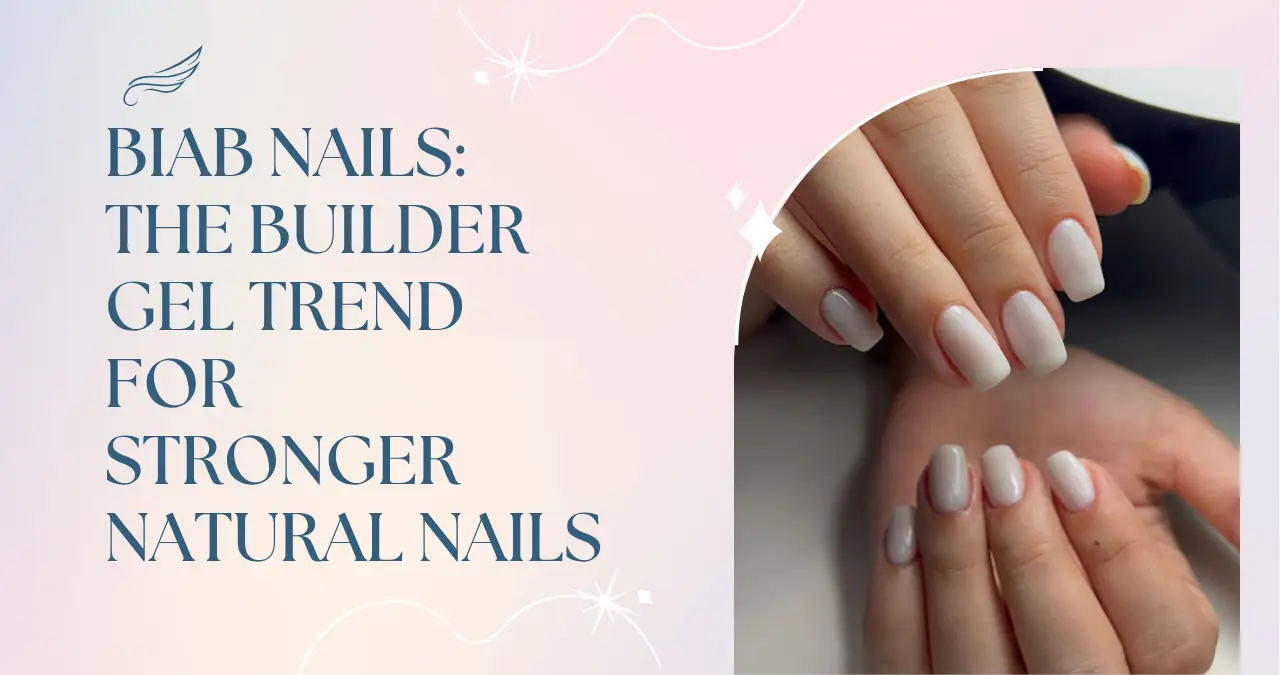
Veena If you‘ve been scrolling through Instagram feeds in recent months, and have been greeted by glossy, chunky looking manicures you‘ve seen BIAB nails, without simply knowing they‘re what you‘re looking at. BIAB is short for “Builder in a Bottle, and is the builder-gel treatment that has “secretly” taken over as the choice for anyone who wants healthy, strong nails but is not looking for a full set of acrylics (or the time and money involved). It‘s exactly half way between the nail worlds: stronger and thicker than any gel polish, but softer and more natural-feeling than acrylics. Here‘s what you need to know before you book in for your next appointment, or try it for yourself.
What is BIAB Nails?
BIAB nails are a brush-on, self-levelling builder gel, applied like a polish and then cured in a UV or LED lamp to produce a durable, high shine overlay. The GelBottle Inc. originally sold a specific B.I.A.B. formula, but the term has become a generic way of referring to any soak-off builder gel in a bottle.
What sets BIAB apart from an average manicure is structure. Regular gel polish is super thin and purely for visual purposes. BIAB has been created specifically to provide strength, to support your own nail or to create short, lightweight extensions with tips and forms. If you‘re after the bigger picture of the product category BIAB falls into, we‘ve separated out what builder gel actually is in a totally different post. When applied correctly, a BIAB manicure should last between 2-4 weeks without any chips or lifts.
How Do BIAB Nails Work?
The process builds in a tiny raised “apex,” or high point, into the nail as the overlay cures. This apex is what gives the overlay its strength and shock-absorbing properties — the same principle that makes an arch stronger than a flat slab.
Because the finish is elastic rather than brittle and hard, it acts more like armor than a shell: it bends a little under pressure instead of cracking. That’s why many users find their nails stop peeling and splitting once they switch to BIAB. The nail itself isn’t growing any faster biologically — it’s simply no longer being knocked back before it gets the chance.
BIAB vs Gel Polish vs Acrylic
This is one of the most common questions people ask after hearing the terms so here‘s the comparison side by side.
| Feature | Gel Polish | BIAB (Builder Gel) | Acrylic |
|---|---|---|---|
| Durability | 1-2 weeks | 2-4 weeks | 3-4 weeks |
| Nail feel | Very thin, flexible | Slightly thicker, still flexible | Rigid, hard |
| Best for | Color only, no strength | Strength + natural look | Length + dramatic shapes |
| Damage risk if removed wrong | Low | Low to moderate | Higher |
| Extensions possible | No | Short only | Yes, any length |
| Home application difficulty | Easy | Moderate | Hard |
The real answer (short version) gel is decoration. Acrylic is structure. BIAB sits in-between by offering more than gel could but still looks and feels like your own nail.
Key Benefits of BIAB Nails
BIAB didn‘t grow into a killer app overnight…there are a handful of feature that make BIAB actually useful, rather than just for show.
- Long-wear performance: A correctly applied and fully cured BIAB manicure will maintain its shine and integrity for two to four weeks after it has been applied, far beyond the life of a gel polish.
- Protection for brittle nails: The overlay provides protection from knocks, typing and bag-digging on a daily basis. This helps to limit breakages and splits.
- Fosters natural growth: Due to it‘s low breakage factor, many hands discover their natural nails are able to develop beyond the tip of the finger. This is a favorite hand move for those leaving acrylics.
- Overlay, or short extension: BIAB can be used bare on the nail as a natural overlay, or with tips and forms for a little extra length but not the bulky feel of acrylic.
- A plumper, glossier finish: It‘s self leveling effect will create a smooth, gently curved surface with a higher specular reflection than a normal gel polish.
- A perfect canvas for nail art: The smooth and structured surface is better than a thin coat of polish to hold chrome powders, cat-eye gels and layered designs.
Potential Drawbacks of BIAB Nails
No single manicure is suited to everyone, so it‘s useful to find out what BIAB doesn‘t do so well.
- The shape is important: BIABs tend to be more flexible and forgiving for softer round shapes such as: oval and almond whereas a sharper square edge will tend to thrust more stress onto the free edge. If you‘re not sure, our guide to different shapes of nail may be useful to you before you book.
- Cost matters: To do it properly as a home career, a UV/LED lamp, dehydrator, primer and top coat are needed with the builder gel itself. This can all add up to cost far more than a bottle of regular polish!
- Technique-dependent: Appling the apex properly and working in transparent, thin layers is a bit trial and error. Applying too quickly and saturating in a too heavy layer are the most common reasons people say it looks like they “lifted”.
- Removal needs to be done correctly: BIAB was made to be soaked off – not peeled or aggressively filed. Attempting to do either of these at home is the quickest way to actually thin out your natural nail!
How to Apply BIAB Nails at Home
The BIAB application process runs through five stages, similar to the one Bella Beauty Ireland describes in their at-home guide. Don’t rush the prep work — it’s what makes the set last three weeks instead of three days.
Prep the natural nail:
Before applying any product to the natural nail, have the client cleanse her hands. Push back cuticles, lightly buff nail plate to remove shine, then remove all dust using a lint free cloth and wash off with nail prep solution to strip any oil.
Dehydrate and prime:
Use a nail dehydrator to remove any residual moisture from the surface, then proceed with a bonding primer. Missing this step is one of the most frequent causes of early BIAB lifting.
Build the layers:
Brush on a thin base “slip” layer and cure — timing varies by product but is usually around 60 seconds under an LED lamp. Follow with a second, slightly thicker layer, shaping a soft apex over the nail’s stress point, then cure again. For extra strength or a bit more length, apply a third layer. Keep product off the skin throughout to prevent lifting.
Refine the shape:
Once cured, lightly file to smooth any bumps and tidy the apex, then clean away dust and residue. Take care with the bottom edge — a close, even edge looks best and avoids overhang.
When cured, lightly file to remove bumps and tidy the apex and clean dust and sticky off.
Seal and finish:
Apply a gel top coat and cure, then remove the sticky inhibition layer per the manufacturer’s instructions. Finish with cuticle oil around the nail folds to keep the skin hydrated. Done right, a BIAB set should last three to four weeks with minimal maintenance.
BIAB Removal and Aftercare Tips
It‘s just as important to take BIAB off correctly as it is to apply it.
- Don‘t peel the DIY. It needs to be soaked off with acetone, not picked or filed off. Peeling also takes away layers of your healthy nails.
- Consider infills. Rather than removing the full set and starting over every three to four weeks, many people top up with an infill instead.
- Apply oil daily. Cuticle oil prevents the periungual area from drying out and the fold from lifting.
- The use of your nails as instruments. Using nails to try to undo a jam jar or pick away at labels applies direct force to the overlay and the nail behind.
Are BIAB Nails Safe on Your Natural Nails?
When applied and removed correctly, BIAB is one of the more nail-friendly options out there. The overlay, as well as keeping nails from breaking, actually allows the polish to grow out beneath a not-too-hard rubbery layer. From my own personal trial I noted how plainly under-whelming the entire thing appeared: it looked, genuinely, just like a person‘s nails, a little shinier and more strengthened, without even looking like they had a filler on.
It doesn‘t actually accelerate biological nail growth. It just prevents the breakage that was preventing you from growing your nails in the first place, so the length becomes the length that you should have already been growing, something Nailicy makes clear in its analysis of BIAB and nail health. As with everything else, the key to safety is prep, clean equipment, good products and avoiding excessive at home filing.
BIAB Nail Trends and Colors to Try
BIAB fits into the ‘clean girl’ and minimal nail trend, where the look is healthy, subtly shaped nails rather than long lengths a shift Woman & Home identified as one of the leading nail stories of recent years. Barely-there nudes, gentle pinks, and subdued greens or reds are all over, worn either silent or under a gel.
The base is so buttery that it became the cream of the crop for Korean-style high-gloss nails, cat-eye finishes, chrome, and stacked decals or rhinestones a popular technique according to Allure that contributed to BIAB‘s massive popularity among nail techs. Many now use BIAB as their foundation, then finish the design with a top coat for a full, occlusive finish to preserve nail art better than a typical polish base.
Candidates for BIAB Nails
BIAB tends to work best for:
For those who have weak, flakey or thin nails and are after strength but not looking for that acrylic weight
Anyone removing acrylics who is after something more flexible and natural
Fans of short-to-medium length hair that is clean, subtle and simple.
Nail art enthusiasts and those wanting a solid base for intricate designs
This is also where shape and finger proportion come into play. If you‘ve got length and width up your sleeve already, a BIAB overlay looks great with the best nail shape for fat fingers the softer apex complements your natural shape rather than competes with it.
It‘s probably not the move for:
Anyone who desires excessively longdramatic length. With long explosive time. Where the stiffness of acrylic still triumphs
People who are less willing to invest in a light and prep products for at home sets
FAQs About BIAB Nails
What is the lifespan of BIAB nails?
Once correctly applied, a BIAB manicure will usually have a life span of around 2 to 4 weeks prior to the infill/removal time, this can be dependent upon your own personal nail growth and daily use.
Whether this is true for weak nails is BIAB better than acrylic?
Yes, for most people with weak/thin nails. BIAB is more flexible and kinder to the natural nail, whereas acrylic is hard and better for more dramatic length.
Where can I get BIAB nails removed?
You may, but it should all be soaked off in acetone rather than peeled or filed off as it pulls healthy layers off the natural nail below.
Do BIAB nails harm your natural nails?
When used and removed correctly, BIAB is gentle and protective. The vast majority of damage reports are the result of inadequate prep or forceful removal practices, not the glue itself.
The Takeaway
BIAB nails are one of the biggest manicure trends right now because they actually solve a very real issue: strength with a natural appearance. Whether you‘re finally saying goodbye to 10 years of acrylics or just sick of gel that lasts five days, it‘s definitely worth bringing up to your nail tech on your next visit. Not sure where to go? Check out our guide to finding the perfect nail salon, what to look for before you sit down with a set, or buy a starter kit if you‘re ready to learn the application process. Have you tried a BIAB set yet? Let us know your experience in the comments, we are always interested to hear what‘s actually lasting out there.


