
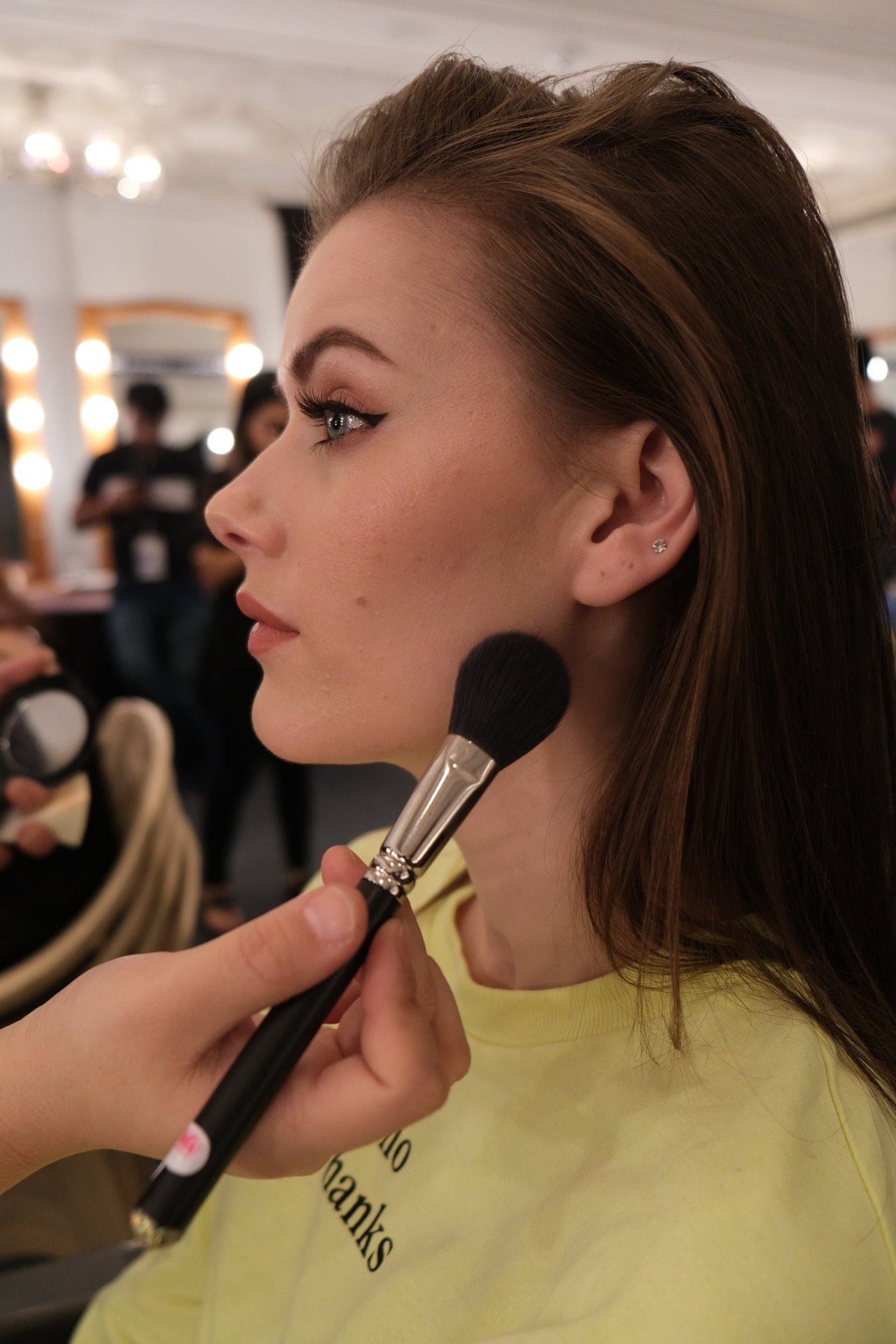
 Veena
Liquid blush gives skin a natural, lit-from-within flush that powder often cannot match. It melts into the skin, looks fresh rather than dusty, and takes about a minute to apply. It can also go wrong fast: one heavy pump sits in a patch and refuses to blend. This guide covers how to choose a shade and formula for your skin, where to place it, and how to fix the usual problems.
Table of Contents
What liquid blush does differently
Blush, also called rouge or blusher, has been used for centuries to add colour to the cheeks, and the history of the product is summarised in the entry on rouge). Liquid versions sit between a tint and a cream. They are water-, gel- or oil-based, dry slowly enough to blend, and then settle into a soft, skin-like finish.
That finish is why people with dry or mature skin like them: powders can cling to dry patches, while a liquid formula moves with the skin. It also layers well, so a sheer wash for daytime can be built up for evening.
How to choose the right shade
Match the shade to the skin tone, then to the mood. Fair skin looks best in soft pink, peach and light rose. Medium skin suits coral, warm pink and terracotta. Deep skin carries rich berry, plum, brick and bold red beautifully.
A useful trick is to pinch the cheek gently and notice the natural colour that appears. A blush close to that shade looks believable, and a slightly brighter version looks polished. If you wear a warm lipstick, a coral or peach blush ties the face together, while berry lips work with rosy tones.
When testing in a shop, swatch on the cheek or the jawline rather than the back of the hand, because the hand is a different colour from the face. Check the result in daylight if possible, since store lighting can make pinks look stronger than they are.
Liquid blush for your skin type
Skin type affects both the formula and the routine. For dry skin, choose a dewy, hydrating formula and apply it over a light moisturiser, and the guide to foundations for dry skin has more on base products that sit well underneath. For oily skin, pick a lightweight, gel-like or matte-finish formula and use a smaller amount, then set it lightly with powder. Combination skin does well with a liquid only on the cheeks and a little powder through the T-zone.
For sensitive skin, patch test any new product on the inner arm and avoid strong fragrance. If irritation appears, stop using it.
How to apply liquid blush step by step
Always apply liquid blush before powder products and after foundation or concealer. Work in thin layers.
- Dot a very small amount on the apples of the cheeks, using the product applicator or a fingertip.
- Smile and blend upwards toward the temples, using a damp sponge, a stippling brush or clean fingers.
- Tap the edges until no line remains, then add another thin layer only if the colour looks pale.
- If you contour, place blush slightly above the contour line so the colours do not muddy. The step-by-step contour and highlight sequence shows where each product goes.
I’d stick with fingers or a sponge in the beginning, because a dense brush can drag the product around before it sets.
Fixing common problems
If the blush looks patchy, the skin underneath is usually dry or the product was blended too slowly. Press a clean sponge over the area to lift extra colour, and add a light layer of moisturising mist. If it looks too strong, dab a little foundation on top and blend again. If it slides off during the day, switch to a thinner layer and set the area with a small amount of translucent powder.
Another frequent slip is placing blush too low, which drags the face down. Keep colour on the high points of the cheek instead.
Another small habit helps: wash hands before blending, and wipe the sponge between uses. Residue from earlier makeup is a quiet cause of streaks.
Pairing blush with the rest of your makeup
Keep the face balanced: bold eyes call for a softer cheek, and a bare eye can take more colour. A soft pink blush with neutral eyeshadow from the ColourPop eyeshadow palettes guide makes a pleasant everyday look. For a fuller, lifted effect, take a look at the tips on adding volume to the cheeks.
Frequently asked questions
Do I apply liquid blush before or after foundation?
After foundation and concealer, but before setting powder. Putting it over powder makes it patchy.
Can I use liquid blush on my lips?
Many formulas are safe for use on the lips, but not all are, so read the label first.
How much should I use?
Start with one or two small dots per cheek. It is easier to add than to remove.


